What's next (AI, robotics and productivity)
This is my understanding, for education. Not personal financial advice.
The way out of the debt problem isn't austerity. It's productivity, and AI just turned it on.
Chapters 1 to 3 showed how the money system leans on debt and inflation. So how does that end? My view: the cleanest way out isn't cutting everything. It's growing faster.
The debt problem in one paragraph
US federal debt held by the public is around 100% of GDP, the highest since just after World War II, and the Congressional Budget Office projects it keeps rising (CBO). There are only a few ways out: raise taxes, cut spending, inflate the debt away (which hits savers, Chapter 3), or grow the economy faster than the debt. Only the last one makes almost everyone better off.
Productivity is the engine
Productivity is output per hour of work (BLS). When it rises, the economy can produce more without more people working more hours. Wages, profits and tax revenue can all grow. Electricity, the assembly line, computers and the internet each kicked off long productivity booms.
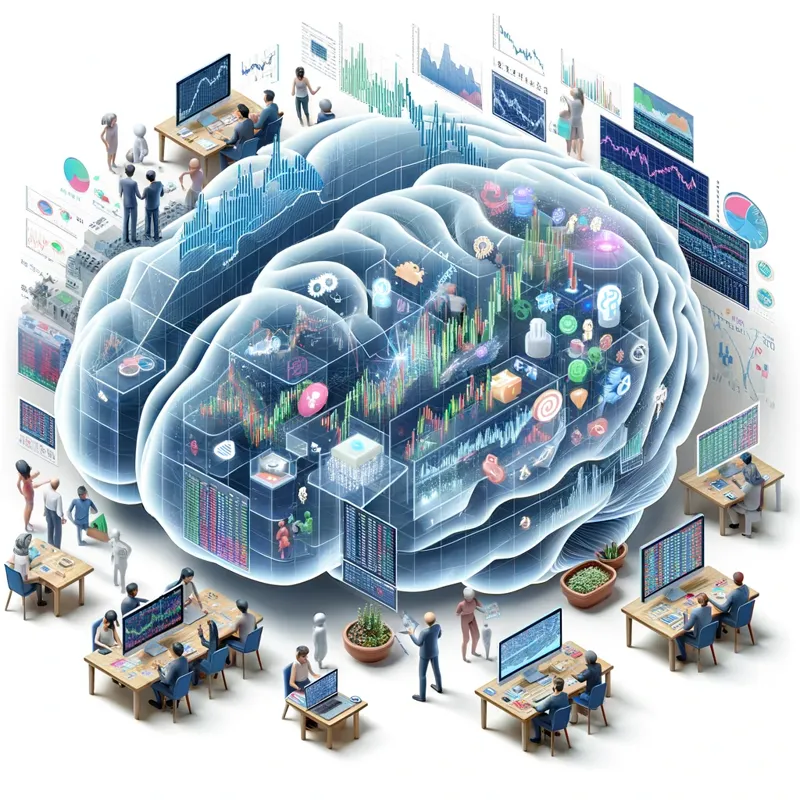
AI is the first technology that can do part of the thinking work, not just the physical work. This year it got genuinely useful at coding, managing large codebases, research and analysis. Robotics extends that into the physical world. If even part of that spreads through the economy, productivity growth could rise for years, and most of that gain hasn't shown up in GDP yet.
Where the money is flowing right now
Every AI model runs on chips in data centers that need huge amounts of power. The biggest tech companies are spending hundreds of billions of dollars a year on that build-out. Nvidia, whose GPUs and CUDA software sparked the modern AI era, supplies most of the AI accelerators. I'm very bullish on it, and I own it. That's my conviction, built with the same checklist you learned in Chapter 5: - Growth: demand for AI computing has outrun supply. - Moat: CUDA's software ecosystem and years of developer lock-in. - Risks I watch: big customers designing their own chips (Google TPUs, Amazon Trainium, Meta, OpenAI with Broadcom), export limits to China, supply limits at TSMC and in power, and the fact that a stock this big can still fall 40–60% (Chapter 7).
I'm showing you how I got to my conviction so you can build your own, not so you copy my portfolio.
The layers of the AI economy
| Layer | Examples of what it includes | What to ask |
|---|---|---|
| Chips | GPU, custom chips, memory | Who has the moat? Can customers replace them? |
| Infrastructure | Data centers, power, cooling, networking | Who has pricing power when supply is tight? |
| Models and platforms | Frontier labs, cloud providers | Who keeps customers, and at what margin? |
| Applications | Software, robotics, healthcare, finance | Who actually lowers costs or creates new revenue? |
Early in a boom, the infrastructure layer usually wins first. Later, the gains spread to the businesses that use the technology best. The internet boom made fortunes in both phases, and wiped out a lot of companies in between.
How to think about it
- Think in decades. The build-out can last years, with sharp drops along the way.
- Separate the trend from the stock. A real revolution can still produce overpriced stocks (Cisco in 2000).
- Avoid hype products. AI theme ETFs and leveraged single-stock funds are Chapter 4 traps.
- Stay a learner. Our daily news section tracks what's changing.
Go deeper
If you want to see how quantitative research and systematic trading work, that's what my other project, QuantDev.ai, is for.
Productivity is the growth engine. Learn who really captures it, then own them with discipline.
Sources
- CBO long-term budget projections: https://www.cbo.gov/topics/budget/long-term-budget-projections
- BLS productivity: https://www.bls.gov/productivity/
- Debt held by public / GDP (FRED): https://fred.stlouisfed.org/series/FYGFGDQ188S
- Morningstar on thematic funds: https://www.morningstar.com/funds/high-burnout-rate-thematic-funds